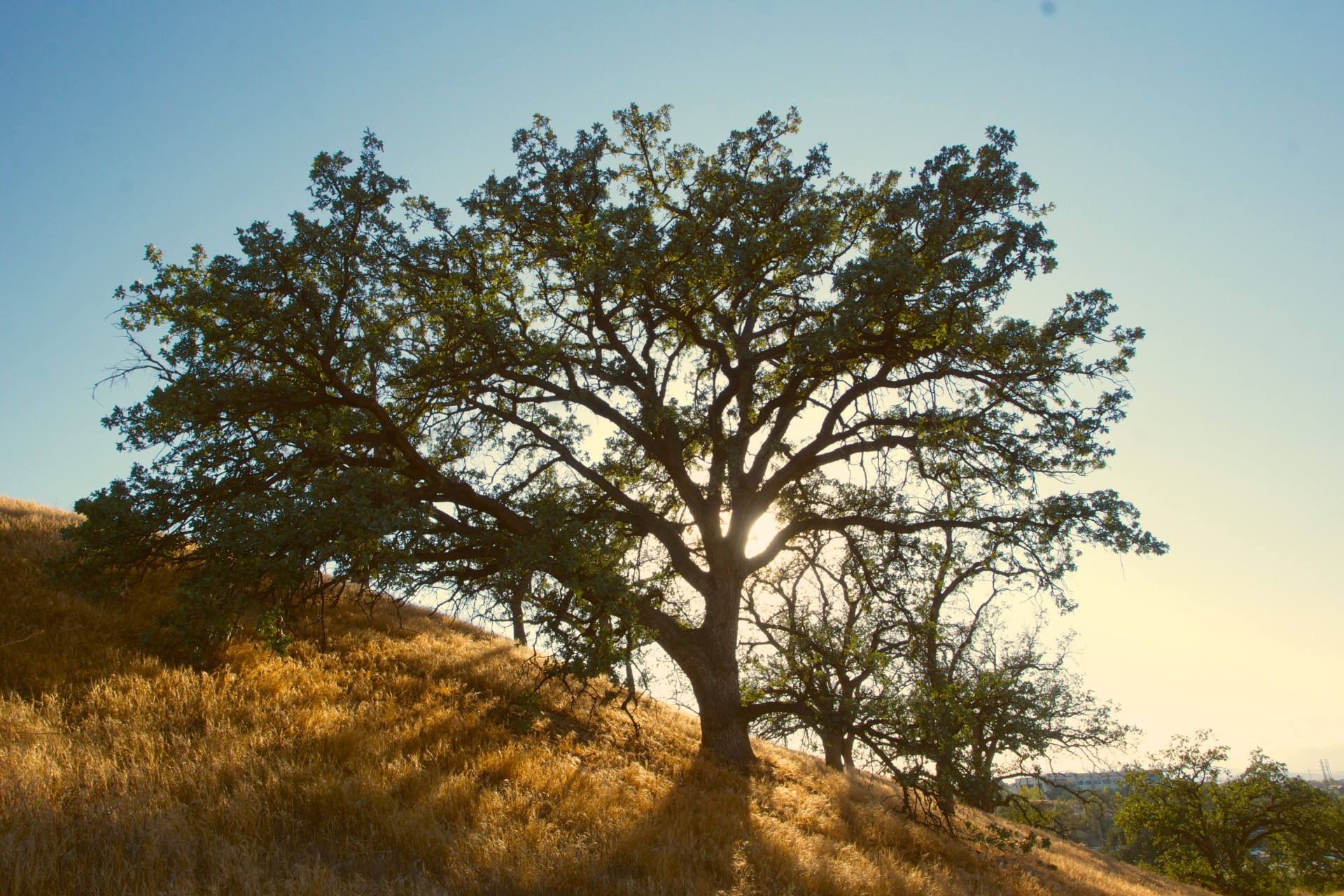
There's a white oak at the edge of my property that I've walked past a thousand times. Wide canopy. Deep furrowed bark. The kind of tree that makes a yard feel like it has history. I always assumed it was old. I never actually knew how old until I started looking into this.
Turns out there's a method arborists have been using for decades to estimate a tree's age without harming it at all. No core sample. No chainsaw. Just a measuring tape and a species-specific number called a growth factor.
The Formula
Every tree species grows at a characteristic rate. A silver maple in good soil adds diameter fast. A white oak takes its time. The International Society of Arboriculture has documented average growth rates for hundreds of species and expressed them as a single number — the growth factor — representing roughly how many years of age are packed into each inch of diameter.
The formula is simple: Circumference ÷ π = Diameter. Diameter × Growth Factor = Estimated Age. That's it. A red oak has a growth factor of 5.5. A silver maple is 3.5. A white oak — the slowest of the common New England oaks — is 7.
How to Measure
You need a flexible tape measure. A cloth sewing tape works perfectly, or a piece of string and a ruler in a pinch. Find the spot on the trunk that's exactly 4.5 feet off the ground — this is called DBH, Diameter at Breast Height, the standard used by foresters and arborists worldwide. It exists because the base of a tree flares and tapers unpredictably, so measuring higher gives you a more consistent number.
Wrap the tape around the trunk at that height and record the circumference in inches. Divide by 3.14 to get the diameter. Multiply by the growth factor for your species. Done.
Example: a red oak with a 62-inch circumference works out to about 19.7 inches in diameter. At a growth factor of 5.5, that's roughly 108 years old.
How Accurate Is It?
Honest answer: it's an estimate, not a birth certificate. Growth factors are averages across large populations of trees, and individual trees vary based on soil quality, water, sunlight, and competition. Expect your result to be accurate within about 20 to 30 percent. That's still meaningful — knowing a tree is roughly 90 to 120 years old rather than just "old" is a real difference.
If you need a precise age for a heritage designation or a legal matter, a certified arborist can do an increment core — a hollow drill that pulls a thin cylinder from bark to center without damaging the tree, and the rings are counted directly. For most of us, the growth factor method is more than enough.
What the Rings Actually Record
Here's something fun to know. The science of reading tree rings is called dendrochronology, and it's one of the most powerful tools in climate science. Each ring is a year — but the width tells you what kind of year it was. Wide rings mean good conditions: warmth, rainfall, open canopy. Narrow rings mean stress — drought, cold summer, disease, heavy competition.
Dendrochronologists have built continuous climate records going back thousands of years using ancient logs and living old-growth trees. The oldest known living trees — Great Basin bristlecone pines in California — are over 5,000 years old. Their rings cover the entire span of recorded human civilization.
Your oak in the backyard isn't quite in that league. But it's still recording something. Every ring is a year of New England weather. A living archive sitting at the edge of your property.
New England Species and Their Growth Factors
Fast growers like red maple (4), silver maple (3.5), and paper birch (5) put on diameter quickly in open, moist conditions. The backbone of most New England forests — sugar maple, yellow birch, black cherry — sit around 5. The slow-growers are where the centuries hide: white oak (7), shagbark hickory (7), eastern hemlock (7). At the very slow end, Atlantic white cedar comes in at 8 — the slowest common tree you're likely to find in a New England bog.
I've put together a complete reference table with growth factors for every species you're likely to encounter, along with an interactive calculator where you can plug in a circumference and get an answer in seconds. Open the Tree Age Calculator →
Go measure something. You might find out you've been sharing space with a tree that was already old when your grandparents were born.
Whatever you're growing this season — grow it well.