Every successful garden begins long before the first seed goes in the ground. In New England especially — where the growing season is compressed and unforgiving — what happens under your grow lights in March and April determines what ends up on your table in August. Get the indoor start right and the rest of the season follows. Get it wrong and you're playing catch-up from day one.
Why Indoor Seed Starting Matters in New England
Zones 5 through 7 don't give you the luxury of direct-sowing everything. Tomatoes, peppers, eggplant, celery, and most flowers need 6 to 12 weeks of indoor growth before they're ready for the garden. The last frost in central New England typically falls between late April and mid-May. That means your indoor season starts in February or March depending on what you're growing — well before there's anything worth looking at outside.
Starting indoors also gives you control. You're not at the mercy of cold soil, variable weather, or slug pressure on tender seedlings. You're delivering a plant that's already established, already growing, already past its most vulnerable stage.
Containers: Coir Pots Over Plastic
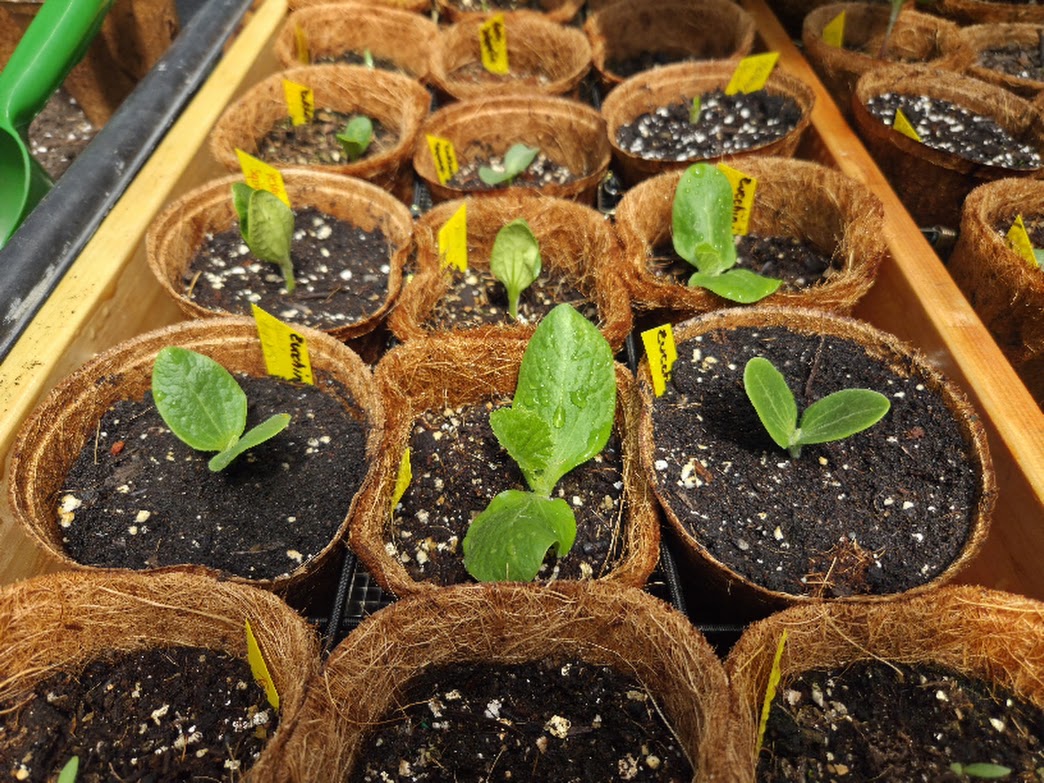
The container question matters more than most people think. Plastic cell trays are reusable but create transplant shock — you're disturbing roots every time you move up. Coconut coir pots solve that problem entirely. The whole pot goes in the ground, roots grow through the walls, and there's no disturbance at transplant time. For anything with sensitive roots — tomatoes, peppers, squash — coir pots are the better choice.
The FibreDust coco coir block is worth having on hand — it expands to 2.5 cubic feet and gives you a consistent, OMRI-listed growing medium at a fraction of the cost of bagged alternatives. Rehydrate it, amend lightly with vermiculite for drainage, and you have a reliable seed-starting base for the whole season.
Seed-Starting Mix
Don't use garden soil or potting mix for seed starting. Both are too dense, too heavy, and often too fertile — high nitrogen at germination pushes leggy, weak growth. Seed-starting mix is fine-textured, well-draining, and low in nutrients by design. Seeds carry everything they need to germinate. What they need from the medium is moisture retention, aeration, and support — not feeding.
A good mix: seed-starting medium as the base, amended with perlite or vermiculite at roughly 20 to 30 percent by volume. This keeps drainage sharp and prevents the compaction that suffocates roots in small containers.
Light: The Most Common Failure Point
Insufficient light is responsible for more failed indoor starts than anything else. A sunny windowsill sounds adequate and almost never is. In March in New England, even a south-facing window delivers maybe 4 to 6 hours of usable light on a clear day — and most days aren't clear. Seedlings stretch toward whatever light they can find, producing the tall, weak, floppy growth that collapses at transplant time.
Grow lights fix this completely. Position them 2 to 4 inches above the seedling canopy and run them 14 to 16 hours per day. As seedlings grow, raise the lights to maintain that distance. The goal is compact, stocky growth — short internodes, thick stems, leaves that sit horizontal rather than reaching upward.
Heat: Germination vs. Growing Temperature
These are two different requirements and confusing them is a common mistake.
- Germination — most vegetable seeds germinate best at soil temperatures between 70 and 85°F. Peppers and eggplant want the higher end of that range. A heat mat under the trays gets you there reliably regardless of ambient room temperature. Once seeds have sprouted, the heat mat comes off.
- Growing on — established seedlings prefer cooler conditions, typically 60 to 70°F. Too much warmth at this stage promotes soft, fast growth that doesn't harden well. Cool nights actually strengthen seedlings.
Moisture Management
Seed-starting mix should stay consistently moist but never wet. Soggy medium is the primary cause of damping off — the fungal collapse that takes out whole trays of seedlings overnight. Bottom watering is the most reliable method: set your trays in a shallow container of water and let the medium wick moisture up from below. This keeps the surface drier, which discourages the fungal conditions that cause damping off, while ensuring the root zone stays hydrated.
Once seedlings are up, water when the top of the medium begins to dry. Not on a schedule — by feel and observation.
Step-by-Step: The Indoor Start Workflow
- Count back from last frost. Find your average last frost date and count back the weeks your crops need. Tomatoes need 6 to 8 weeks, peppers 8 to 10, onions 10 to 12. That's your sow date.
- Prepare containers and mix. Fill coir pots or cells with moistened seed-starting mix. It should clump when squeezed but not drip. Firm it lightly — don't pack it.
- Sow at the right depth. A general rule: plant seeds at a depth equal to twice their diameter. Fine seeds like basil and celery go on the surface and are pressed in lightly. Large seeds like squash go an inch deep.
- Label everything. Do it now, before you think you'll remember. You won't.
- Cover and apply heat. Cover trays with a humidity dome or plastic wrap to retain moisture. Place on a heat mat set to 75 to 80°F. Check daily.
- Remove dome at germination. The moment you see sprouts, the dome comes off and the lights go on. Don't wait — etiolated seedlings reaching for light in a closed dome go downhill fast.
- Bottom water going forward. Switch to bottom watering once seedlings are established. Keep the surface of the medium from staying constantly wet.
- Pot up when roots fill the container. When you see roots emerging from the bottom of coir pots or cells, it's time to move up. For coir pots, plant the whole thing.
- Harden off before transplanting. One to two weeks before your transplant date, start moving seedlings outside for increasing periods each day. Start with an hour of filtered shade, work up to full sun and full days. This is not optional — plants grown under artificial light will sunburn and struggle if moved outside without transition.
The Mindset That Makes It Work
Indoor seed starting rewards attention more than effort. You're not doing much on any given day — checking moisture, adjusting lights, watching for germination. But you're doing it consistently, every day, for weeks. The gardeners who get it right aren't doing anything complicated. They're just paying attention.
Give your seeds what they need, when they need it, and the growing season will take care of the rest.
Whatever you're growing this season — grow it well.