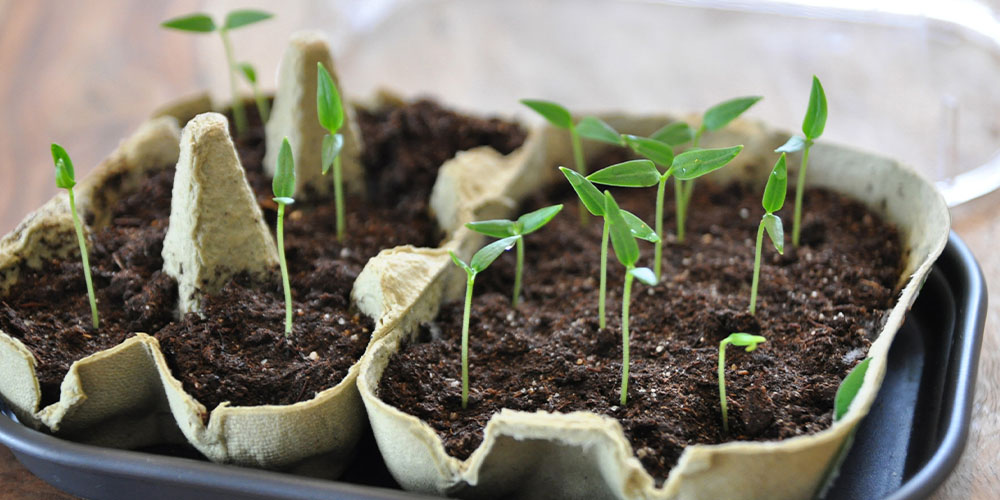
Seed starting looks simple on paper. Fill a tray, plant a seed, add water, wait. In practice, most gardeners lose a significant percentage of their seedlings every year to a handful of preventable mistakes. Here's what's actually going wrong.
Using the Wrong Growing Medium
Garden soil is not seed starting mix. Neither is potting mix, despite what the bag sometimes implies. Seed starting mix is finely textured, low in nutrients, and designed to drain well while staying consistently moist. Regular potting mix is too coarse, holds too much water, and compacts in small cells. Garden soil introduces pathogens and compacts even worse.
Brands matter less than texture. What you're looking for is a fine, uniform mix with perlite for drainage and no large chunks of bark or wood. Squeeze a handful — it should hold together but fall apart easily when released. If it stays clumped, it's too wet or too heavy for germination.
Planting Too Deep
Most vegetable seeds should be planted at a depth of two to three times their diameter — not two to three times their length. A tomato seed is about 3mm across. It should be planted 6 to 9mm deep. Many gardeners plant twice that, and the seedling exhausts its energy supply trying to reach light before it ever emerges.
Small seeds — lettuce, basil, celery — often need light to germinate and should be pressed onto the surface of the mix rather than buried at all. Read the packet. The depth recommendation is there for a reason.
Inconsistent Moisture
Seeds need consistent moisture from the moment they're planted until they've germinated. A single drying out event during germination can kill the emerging root tip even if the seed itself survives. A single overwatering event can introduce damping off — the fungal disease that causes seedlings to collapse at the soil line.
Bottom watering is the solution to both problems. Set your trays in a shallow container of water and let the medium wick moisture up from below. Check daily. Water when the surface starts to lighten in color, before it dries out completely. Never let trays sit in standing water for more than an hour.
Not Enough Light
A south-facing window is not enough light for most seedlings in a New England February or March. The days are too short, the angle of the sun is too low, and the glass filters some of the spectrum seedlings need. The result is leggy, stretched plants reaching toward the window — plants that will struggle to establish when transplanted.
A grow light 2 to 3 inches above the seedling canopy, on for 14 to 16 hours per day, solves this completely. A basic shop light with one cool and one warm fluorescent bulb works. Full-spectrum LED panels work better. The distance matters as much as the type — too far away and you get the same legginess you were trying to avoid.
Skipping Hardening Off
A seedling that has spent six weeks under grow lights in a 65-degree room is not prepared for direct sun, wind, and temperature swings. Move it outside without a transition period and the foliage will sunscald within 48 hours — white, papery patches on leaves that look like the plant has been bleached.
Hardening off takes seven to ten days. Start with one hour of outdoor shade on day one. Add an hour each day. Move to morning sun in the second week. Full sun by day ten. It feels slow. It's worth it. Plants that are properly hardened off establish faster and more completely than plants that weren't.
Starting Too Early
A tomato started ten weeks before your transplant date will be root-bound, stressed, and harder to establish than one started six weeks out. Earlier is not better. Earlier is often worse. Count back from your last frost date, follow the recommended weeks on the seed packet, and resist the urge to start in January just because the catalogs arrived.
Whatever you're growing this season — grow it well.