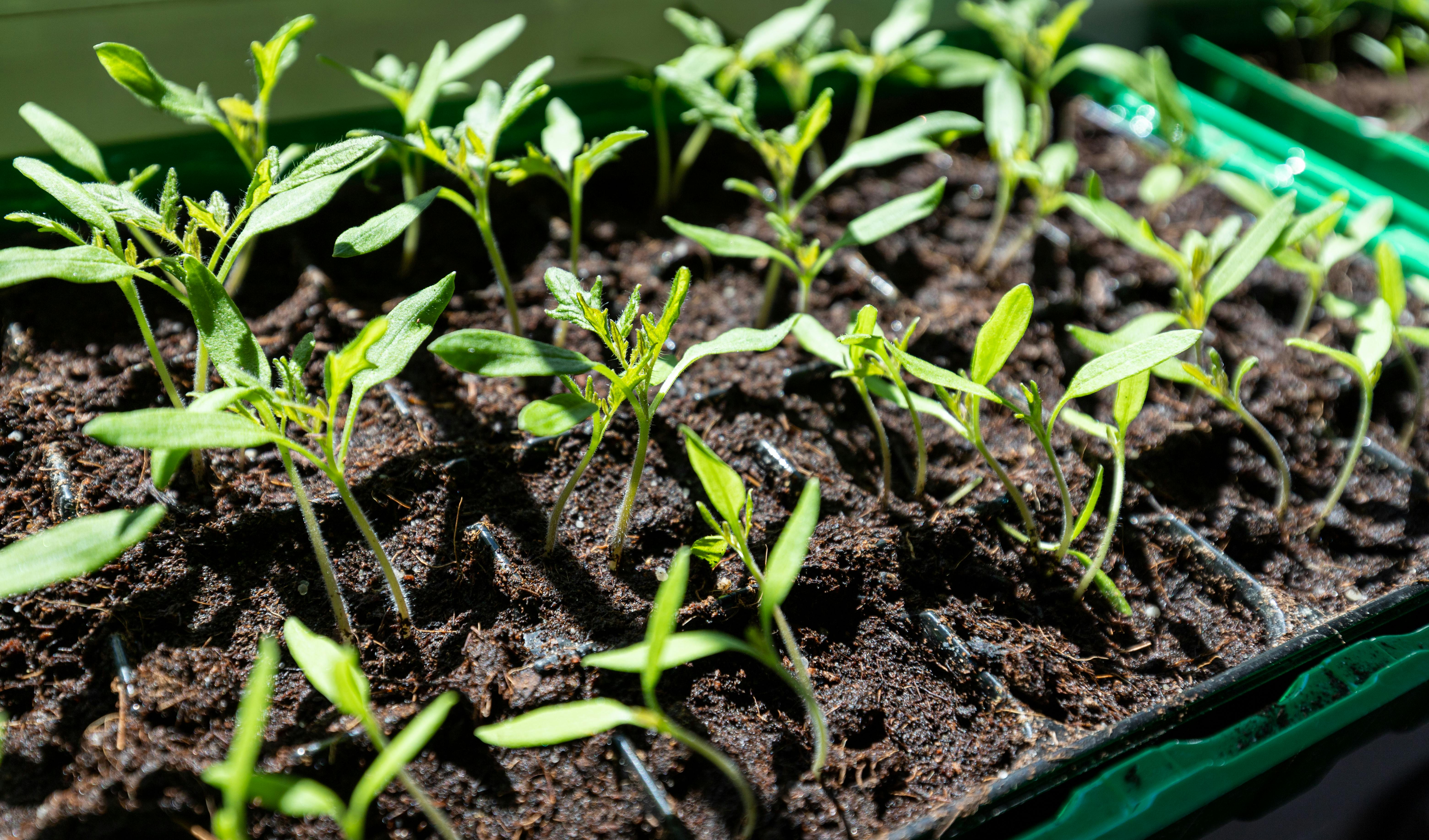
A six-pack of tomato transplants at the garden center costs $6 to $10 and gives you one variety chosen for shelf appeal rather than flavor or disease resistance. A $4 packet of seeds gives you 25 to 50 plants of a variety you chose specifically, at a total cost of about $0.15 per plant. The economics of growing your own transplants are so lopsided that the only argument for buying them is convenience — and once you've done it a few times, it isn't even that inconvenient.
What You Actually Need
The barrier to starting seeds indoors is mostly psychological. The actual equipment list is short: seed starting mix, containers with drainage, a grow light (non-negotiable in New England), a heat mat (for peppers and eggplant specifically), and labels. Total investment under $100, most of which lasts years.
A two-bulb shop light with one cool and one warm fluorescent bulb hung 2 to 3 inches above the seedlings works. It's not optimal but it produces good plants. Full-spectrum LED panels work better and use less electricity. Either is vastly better than a windowsill in February.
The Variety Argument
Your local garden center carries 8 to 12 tomato varieties chosen for sales appeal and availability from wholesale growers. Seed catalogs carry hundreds. The specific tomato you want — the one that produces well in your microclimate, ripens in your season window, and tastes the way you want it to taste — almost certainly isn't in the garden center six-pack. It's in the seed catalog.
After a few years of trialing varieties in your own garden, you'll have a shortlist of performers specific to your conditions that you can't buy as transplants anywhere. That's a genuine advantage that compounds over time.
Plant Health
Commercial transplants are grown under conditions optimized for production and transport — not for garden performance. They're often root-bound, stressed from shipping, and have been exposed to whatever diseases were circulating in the greenhouse. A transplant you grew yourself, started at the right time and hardened off properly, has never been stressed and is perfectly sized for transplanting.
The Learning Curve
The first year you start seeds indoors, you will make mistakes. You'll start something too early and it'll be root-bound by transplant time. You'll underwater or overwater. You'll get leggy seedlings because the light was too far away. None of these mistakes are disasters — they're the process of learning what works in your specific setup.
By year three you'll have a system dialed in that runs almost automatically. You'll know exactly when to start each crop, how much to water and when, which varieties perform in your garden. That knowledge is worth more than the $100 you saved on transplants.
Starting This Year
If you've never started seeds indoors before, start with tomatoes and basil. They're forgiving, rewarding, and give you the clearest feedback on what's working. Get those right for a season and everything else follows naturally.
Whatever you're growing this season — grow it well.